
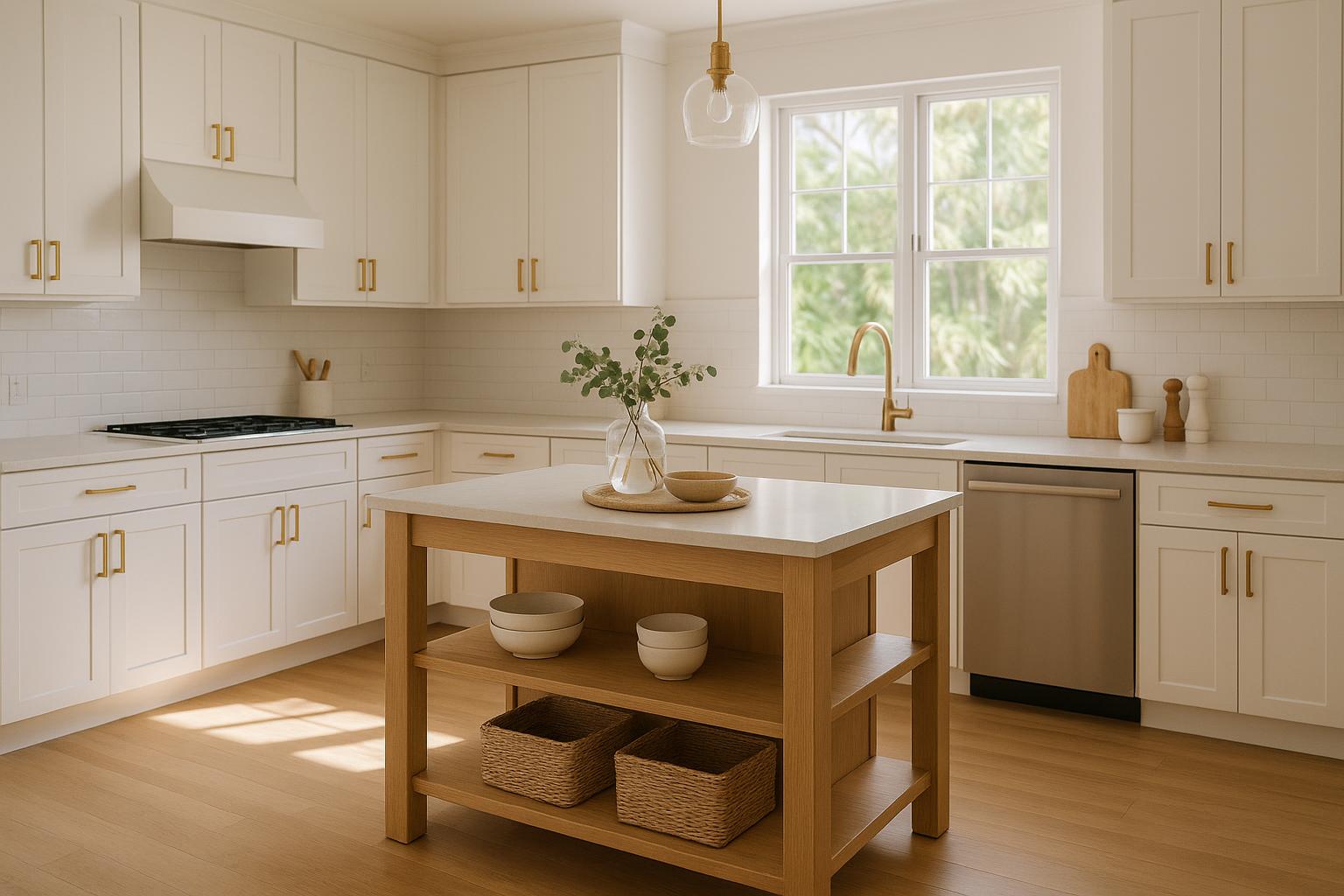
The Cabinet Decision That Shapes Your Entire Renovation
When homeowners in Homestead start planning a kitchen or bathroom renovation, cabinets are usually one of the first things that come up — and for good reason. Cabinetry can account for 30 to 50 percent of a kitchen remodel budget, and the choice between custom-built and stock options affects everything from how your space looks to how well it functions five or ten years down the road.
It's a decision that deserves more than a quick glance at a catalog. Whether you're renovating a cozy bungalow in Florida City or updating a larger family home in Cutler Bay, understanding the real differences between custom and stock cabinets will help you spend wisely and avoid regret.
What Are Stock Cabinets?
Stock cabinets are pre-manufactured in standard sizes and finishes. They're mass-produced, which keeps costs low and lead times short. You'll find them at big-box home improvement stores, and they typically come in a limited range of widths, heights, and styles.
Advantages of Stock Cabinets
- Lower cost: Stock cabinets are the most budget-friendly option, often costing 40 to 60 percent less than custom alternatives.
- Fast availability: Because they're already manufactured, stock cabinets can be delivered in days or a few weeks rather than months.
- Predictable quality: Major manufacturers have consistent quality control, so you know what you're getting.
Drawbacks of Stock Cabinets
- Limited sizes: Standard dimensions don't always fit non-standard spaces. Many older Homestead homes have quirky layouts, uneven walls, or unusual ceiling heights that stock cabinets can't accommodate without filler strips or awkward gaps.
- Fewer material and finish choices: You're limited to whatever the manufacturer offers in their current lineup.
- Less storage optimization: Generic interior configurations may not match how your family actually uses the kitchen or bathroom.
What Are Custom Cabinets?
Custom cabinetry is built to your exact specifications — dimensions, materials, finishes, hardware, and interior organization are all tailored to your space and needs. A skilled cabinet maker designs and constructs each piece specifically for your home.
Advantages of Custom Cabinets
- Perfect fit: Custom cabinets are measured and built for your specific room, which means no wasted space, no filler panels, and a seamless look from wall to wall.
- Unlimited design options: Want a specific wood species, a unique paint color, soft-close drawers throughout, or pull-out spice racks designed for how you cook? Custom makes it possible.
- Higher quality construction: Custom cabinets are typically built with superior joinery, thicker panels, and more durable finishes that hold up better over time — especially important in South Florida's humid climate.
- Increased home value: Well-crafted custom cabinetry is a selling point that buyers notice and appraisers value.
Drawbacks of Custom Cabinets
- Higher price point: You're paying for craftsmanship, materials, and personalization, which adds up.
- Longer lead times: Custom cabinets can take six to twelve weeks to design and build, so you need to plan ahead.
- Requires a trustworthy builder: The quality of custom work depends entirely on who's doing it. Choosing an experienced renovation team matters.
What About Semi-Custom Cabinets?
There's a middle ground worth mentioning. Semi-custom cabinets start as stock products but offer more flexibility in sizing, finishes, and interior accessories. They cost more than stock but less than full custom, and lead times fall somewhere in between.
For many homeowners in Homestead and surrounding areas like Palmetto Bay and Kendall, semi-custom cabinets hit a sweet spot — especially when the layout of the room is fairly standard but you want better materials or specific organizational features.
How South Florida's Climate Factors In
This is something that doesn't get enough attention. Homestead's heat and humidity put extra stress on cabinetry. Cheaper stock cabinets made with particleboard or low-grade MDF can swell, warp, or delaminate over time when exposed to moisture — and in South Florida, moisture is a constant.
If you're choosing stock cabinets, look for plywood construction rather than particleboard, and make sure the finish is moisture-resistant. With custom cabinets, your builder can select materials specifically suited to our climate, which gives you a significant durability advantage.
Questions to Ask Yourself Before Deciding
Before you commit to either direction, work through these questions honestly:
- What's your realistic budget? If cabinets need to stay under a certain number, stock or semi-custom may be the practical choice. But don't just compare sticker prices — factor in the cost of filler pieces, modifications, and potential replacements down the line.
- How long do you plan to stay in this home? If you're renovating your forever home in Homestead, investing in custom cabinetry pays dividends in daily enjoyment and long-term durability. If you're updating a property to sell within a few years, stock or semi-custom may deliver a better return on investment.
- Does your space have unusual dimensions? Older homes, homes with additions, or rooms with angled walls and soffits often need custom solutions to look right and function well.
- How important is storage optimization? If you have a smaller kitchen and need every inch to work hard, custom interiors — think deep drawers, corner carousels, built-in dividers — can transform a cramped space into an efficient one.
- What's your timeline? If you need the project done quickly, stock cabinets are the faster route. Custom work requires patience, but the results reflect that investment of time.
Mixing and Matching: A Smart Strategy
Here's something many homeowners don't realize: you don't have to go all-in on one type. A common approach we see work well is using stock or semi-custom cabinets for the majority of a kitchen and then adding custom pieces where they matter most — a built-in pantry, a unique island design, or a window-seat storage bench.
This hybrid approach lets you control costs while still getting that tailored feel in the areas where it counts. It's especially effective for whole home renovations where the cabinetry budget needs to stretch across multiple rooms.
Making the Right Choice for Your Home
There's no universally correct answer to the custom vs. stock debate. The right choice depends on your home's layout, your budget, your timeline, and how you want your space to feel when the renovation is complete.
What matters most is working with a renovation team that understands these trade-offs and can guide you honestly — not one that pushes the most expensive option or cuts corners with the cheapest one. At Homestead Full Home Renovation, we help homeowners across Homestead, Princeton, and the surrounding communities navigate these decisions every day. We'll walk through your space, talk through your priorities, and recommend the approach that actually makes sense for your situation.
If you're planning a renovation and cabinets are on your mind, reach out for a conversation. No pressure, no sales pitch — just straightforward advice from people who do this work and care about getting it right.